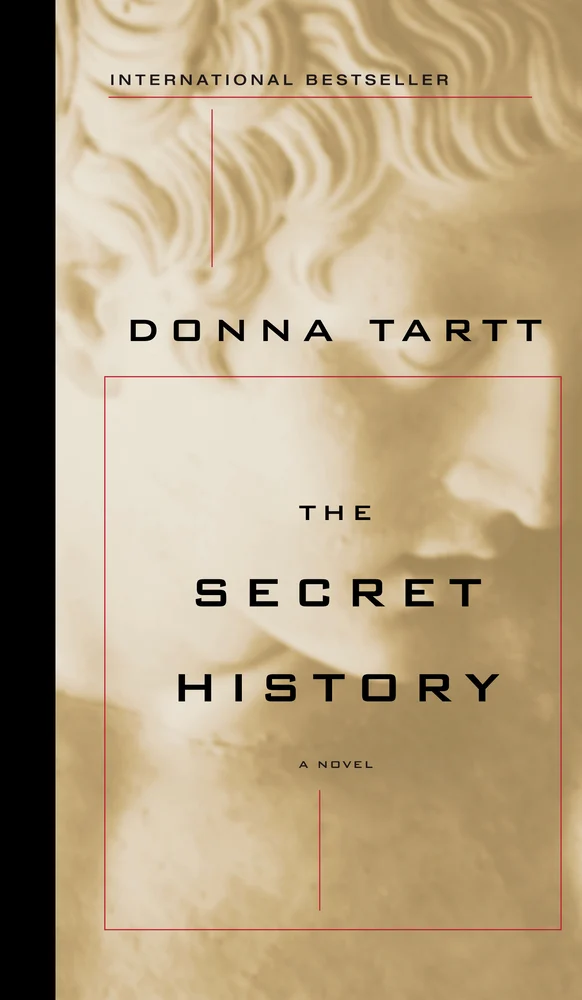
I first read Donna Tartt’s “The Secret History” when it was published in 1992 — I’m sure I still have the first edition hardcover someplace, that slightly oddly shaped book with the classical statue on the cover. It was my first year of graduate school, and while my academic experience was not nearly so intense as Hampden College had to offer, I still found enough echoes to keep me turning pages.
Fast forward 33 years (yikes!), and I stumble on the podcast “Once Upon a Time … at Bennington College” by Lili Anolik, a dishy, breathless, scandalous investigation of the origins of Bret Easton Ellis, Jonathan Lethem, and Donna Tartt in the combustion chamber of their 1980s college experience. I had, of course, read Ellis, Lethem, and Tartt (and related literary “Brat Pack” writers Jay McInerny, Jill Eisenstadt, and Tama Janowitz) when they were the new hip thing — they were just a few years older than me, and they seemed to be telling the story of my generation with fresh, unblinking eyes. And I hadn’t really though of them since then.
One of the things that was interesting about the podcast was that while Anolik got Ellis, Lethem, and others to speak on the record, the notoriously reclusive Donna Tartt refused to participate. But Anolik used excerpts from Tartt’s narration of “The Secret History” in interesting ways, and I found her voice fascinating: her accent is slippery, a Southerner trying to mask her drawl in an approximation of patrician New England archness, and her delivery is often odd, almost uncanny. I needed to hear more of that voice, so I checked out her audio book narration of “The Secret History” from the library so I could lose myself in all 22 hours and 3 minutes of it.
I came away liking the book even more than the first time I read it, but in different ways. Where before I had been a little in awe of Henry, the little clique’s leader, now I saw how incredibly daft and rudderless he was; I found Bunny even more annoying in Tartt’s voice (she does a great Bunny), but also much sadder; and Julian … what a loser, am I right?
Of course, it wasn’t just Tartt’s delivery that colored my new perspectives — it was also the fact that a 56-year-old reader will bring completely different experiences to the story than a 24-year-old did. I’m not by habit a re-reader of books, and this was an illuminating experience for me. What had seemed tragic then seems farcical now, but at the same time I find myself feeling more sympathetic toward the characters’ foibles.