A beautiful, elegiac novella of a lost time
If I’d stayed there, would I always have been happy? No, I suppose not. People grow older, die, and in the bright belief that there will always be another marvelous thing around each corner fades. It is now or never; we must snatch at happiness as it flies.
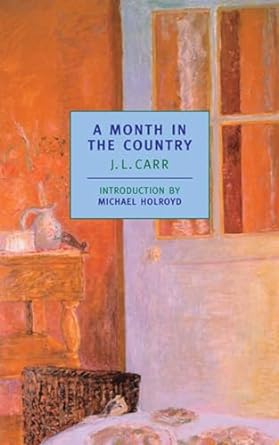
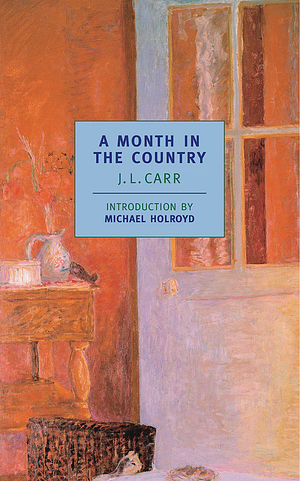
J.L. Carr’s novella “A Month in the Country” packs very little action but a whole lot of poetry into 111 short pages. Set in the small Yorkshire village of Oxgodby in 1920, it tells the story of Tom Birkin, a veteran of the Great War, as he works to restore a church mural that has been hidden under a layer of whitewash for centuries. The war is seldom explicitly present, but its shadow, and Birkin’s broken marriage (itself possibly a casualty of the war), stretches across the summer he spends sleeping in the belfry and working on the wall.
It’s also a glimpse into a world that was in the process of dying in those years, a horse- and steam-powered rural landscape dominated by quiet tensions between church and chapel, the rhythms of agriculture, and strict social mores that are slowly dissolving. Birkin is a Londoner, foreign to the rural Yorkshire folk he finds himself among, and they are as bemused and befuddled by him as he is of them.
Birkin is healed, or almost, from his war trauma by the slow pace of his work, by the steady rhythms of the village, and by his friendship with Moon, an archaeologist who has been hired to find the grave of a recently deceased matron’s ancestor. It’s hard to call it an optimistic novella — the glass (or pint of ale) is both half full and half empty, with some losses impossible to recover — but it’s a quietly hopeful novella.