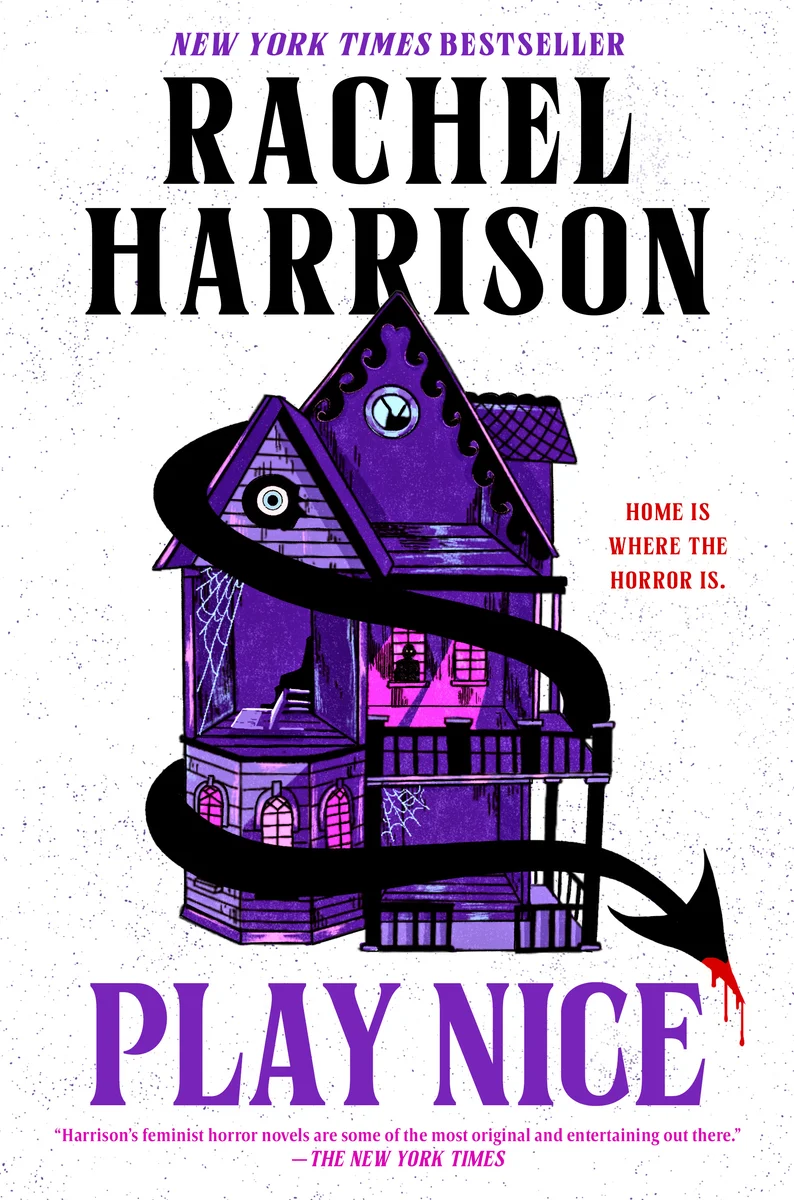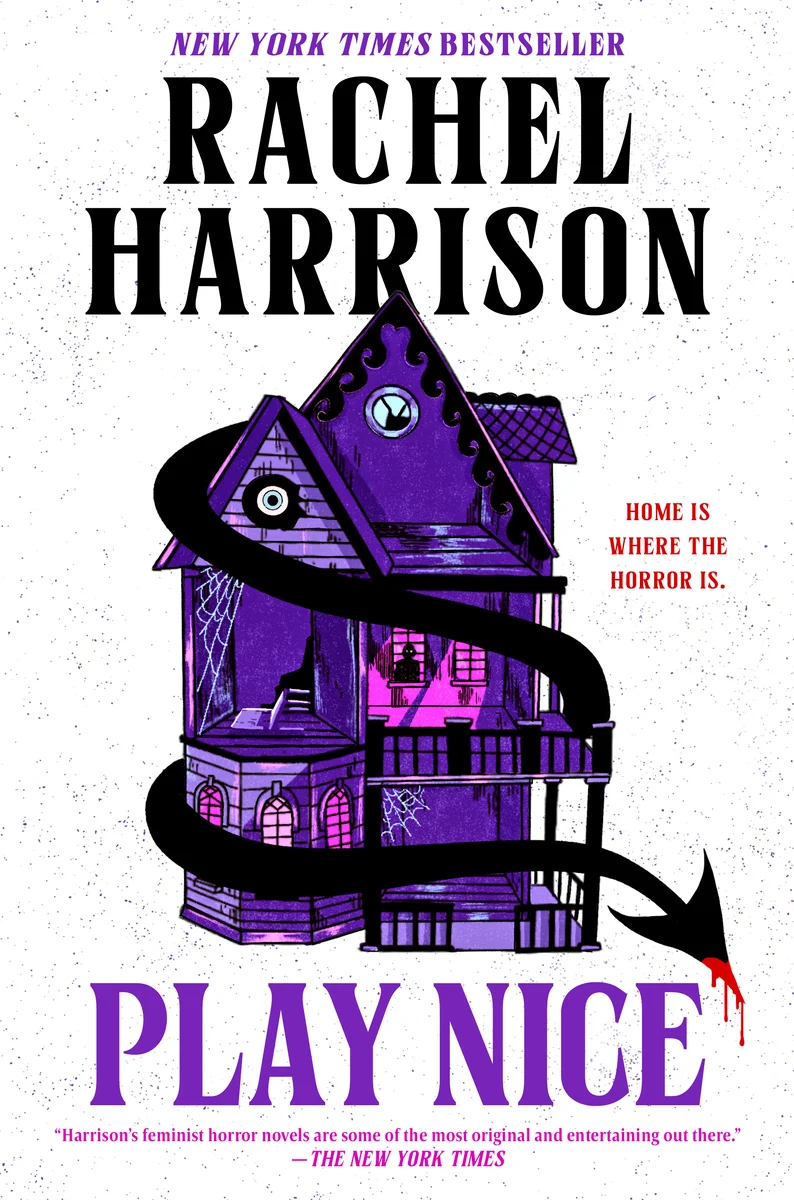
Rachel Harrison’s “Play Nice” would pair well with Grady Hendrix’s “My Best Friend’s Exorcism” or Paul Tremblay’s “A Head Full of Ghosts”: all center on an ambiguous childhood horror that could be a sign of madness, or could be a true demonic infestation, or could be a slippery thing in the middle. There’s an ambiguity to these grief-soaked stories that makes them all the more unsettling than if the evil were fully manifest in all its technicolor glory.
Clio, the narrator of “Play Nice,” is a fashion consultant and social media influencer with a dark past. Her estranged mother wrote a book, “The Demon of Edgewood Drive,” about the purported supernatural events that led to the dissolution of her family. The book, a sort of “Amityville Horror” blend of fantasy and reality, is long out of print, and with Clio’s mother’s passing, there’s no one left to tell her mother’s side of the story, though Clio’s sisters and father are more than happy to insist on their version of events. Clio herself was too young to recall the details of the hauntings and exorcisms, or perhaps her memories have been warped by others’ retellings or by the demon’s own wicked amnesiac spell.
The house — a suburban split-level fallen into neglectful disrepair — was still in her mother’s possession (or vice versa?) at her death, and Clio decides, against her family’s wishes, to make fixing and flipping it a project to boost her social media brand. As she begins the undertaking, though, she stumbles into memories and madness, and soon loses her bearings within her mother’s fabulous accounts.
Clio is a delightfully unreliable narrator. She’s aware of her own artifice — her career is, after all, built on projecting a highly curated version of her life — but is also easily swayed into beliefs about the house’s supernatural side. She vacillates between true belief and cynical skepticism, right up until the harrowing conclusion. “Play Nice” is paced to keep you turning pages, and to keep the reader unsteady and uncertain.